Fat is cheap. Carbs are cheap. Protein is expensive.
Simple economics explains the global obesity epidemic.
Basic economics shows why we have an global crisis in obesity and metabolic disease. We have already seen and understood the fundamental problem: people eat too much fat and glycemic carbohydrate, and too little protein and fiber. But why do we do this?
The answer is simple: fat and carbs are cheap, while protein is expensive. Processed food companies therefore have a powerful incentive to use cheap flour, sugar, and seed oils as raw materials. They have a strong disincentive to use foods that contain significant protein. I will demonstrate this through a few simple examples. We will compare the three main macronutrients - fat, carbohydrate, and protein - on a level playing field. To do this we will estimate their cost in cents (US) per gram.
Fat
For this and all the other examples, let’s try to find one of the cheapest possible examples of the macronutrient in question. At the retail level, it’s probably hard to find cheaper fat than buying six quarts of canola oil at Costco.
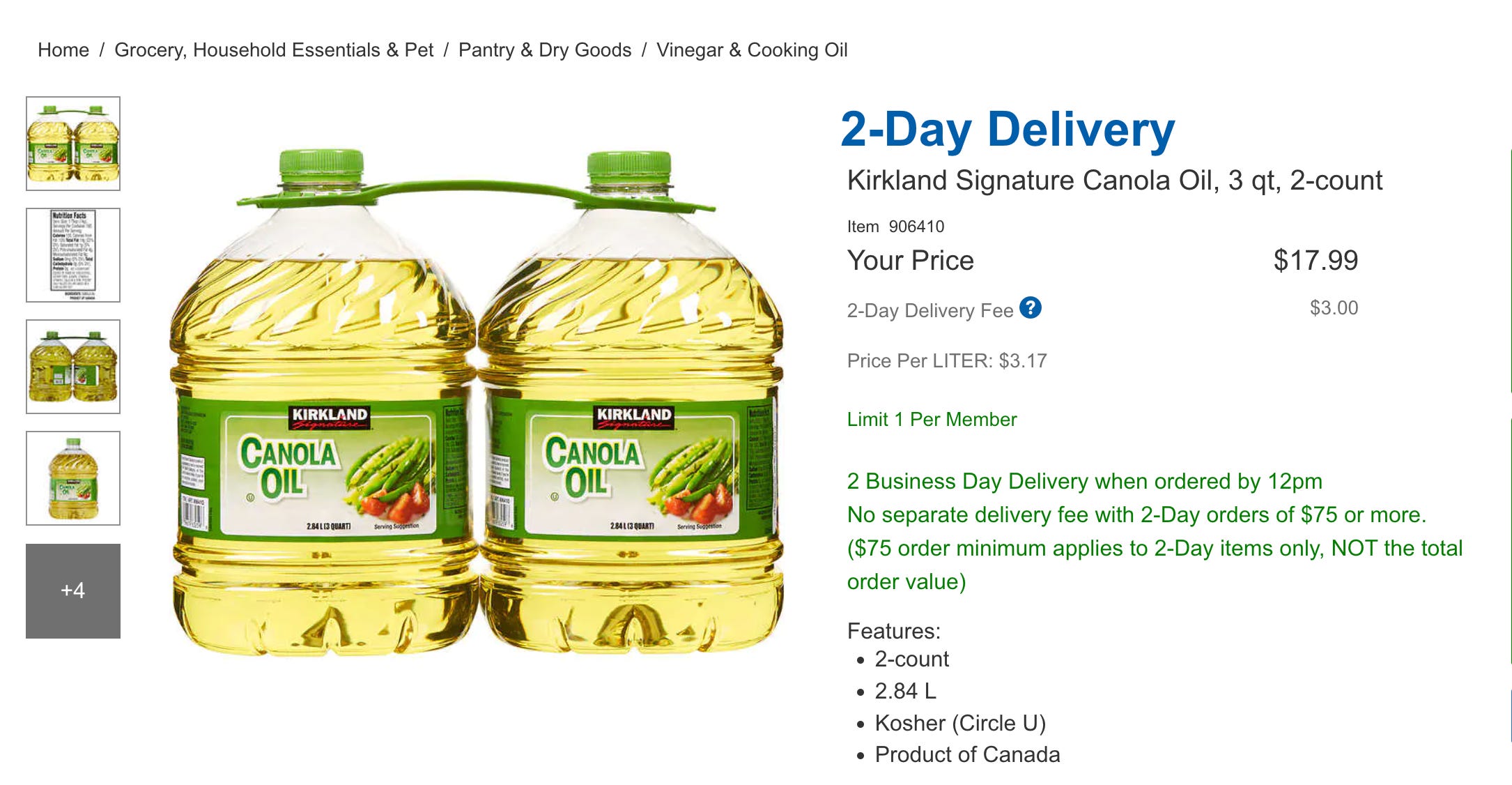
The price is $17.99, or 1799 cents. Let’s take a look at the grams of fat in this product by checking the nutrition label
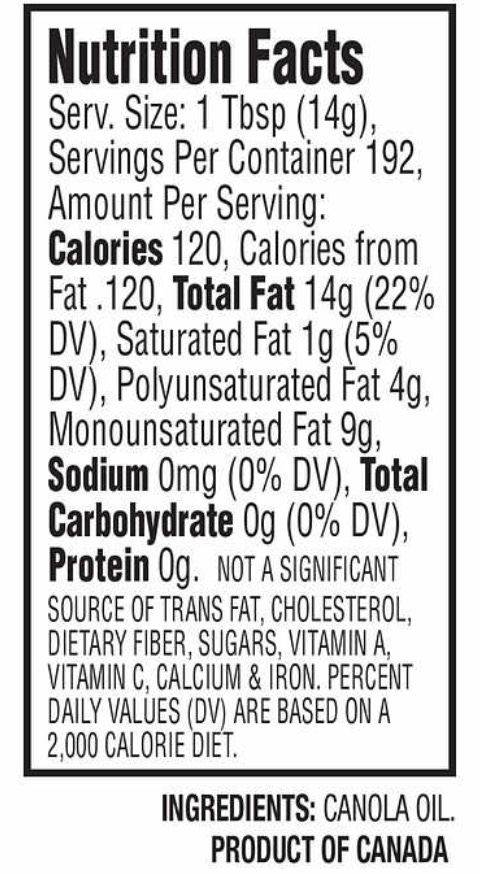
.
We see that in each bottle there are 14 g/serving * 192 servings = 2688g of fat. That makes 5376g in total for the two bottles.
Therefore the unit cost is 1799 / 5376 = 0.33 cents per gram of fat.
Carbohydrate
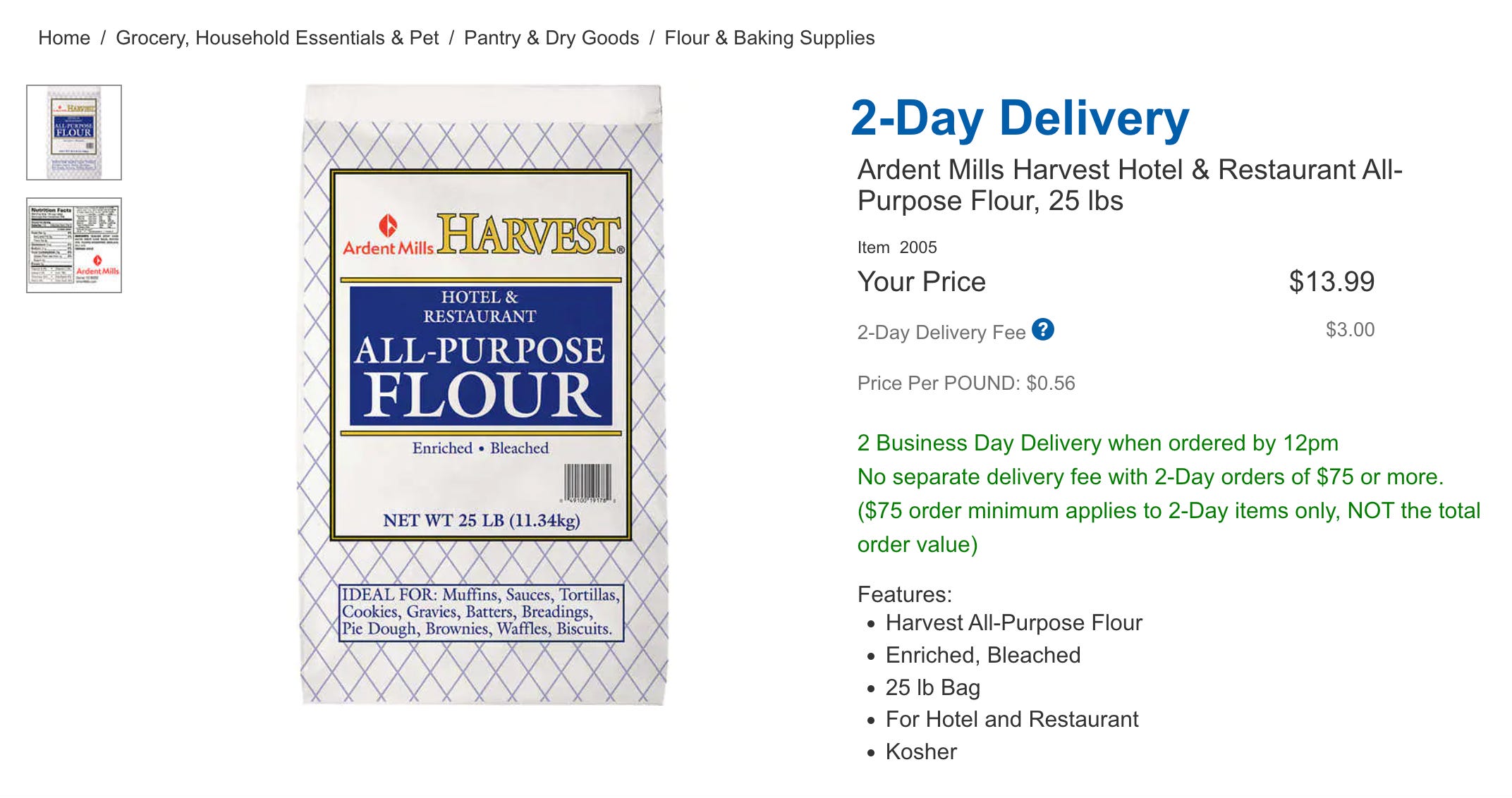
Next, let’s look at carbohydrate. Plain white flour in a 25 pound bag is about as cheap as you can get at the retail level for your carbohydrates
.
Here the price is $13.99, or 1399 cents. As before, we will find the grams of carbohydrate in this product by checking the nutrition label
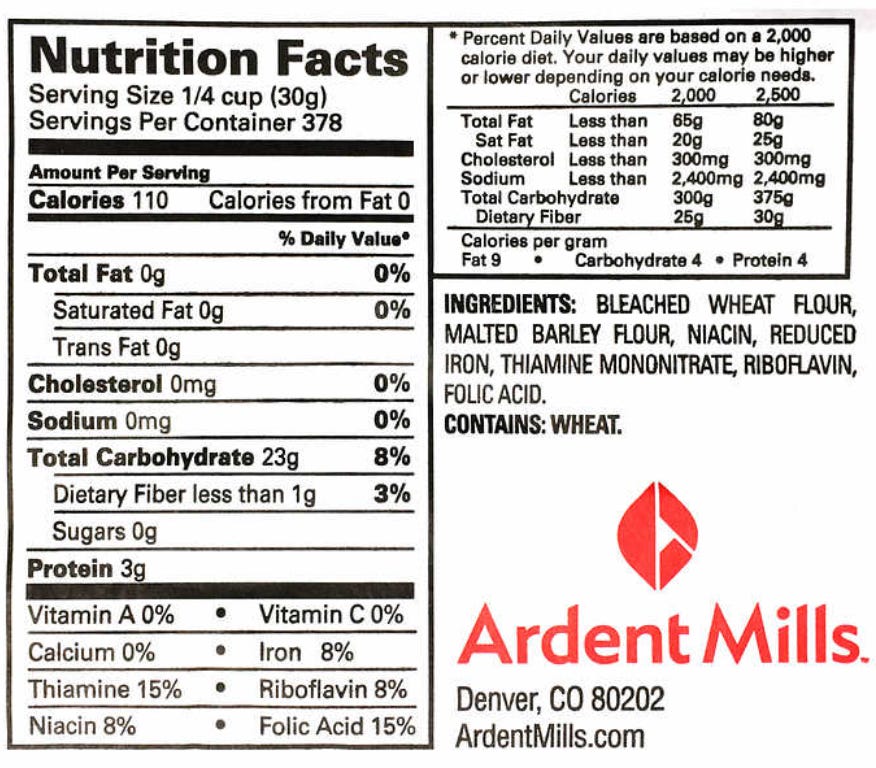
.
The bag contains 23 g/serving * 378 servings = 8694g of carbohydrate.
Therefore the unit cost is 1399 / 8694 = 0.16 cents per gram of carbohydrate.
Protein
Finally, let’s take a look at protein. One of the single-ingredient foods with the highest concentration of protein is egg whites
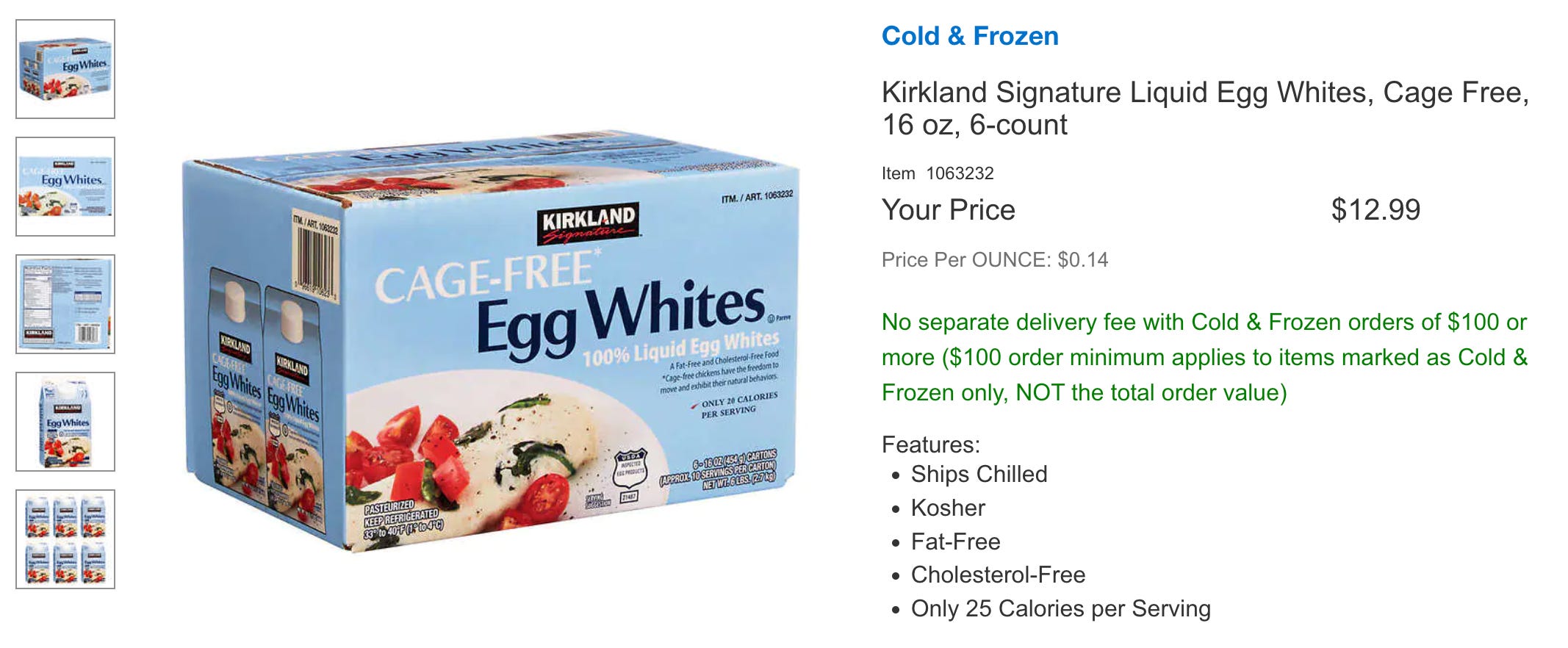
.
Again we can estimate the grams of protein from the nutrition label
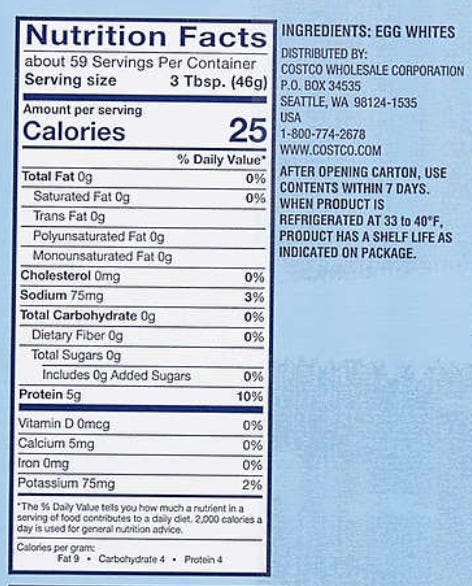
.
The complete pack of six cartons contains 5 g / serving * 59 servings = 295g of protein.
Therefore the unit cost is 1299 / 295 = 4.4 cents per gram of protein.
Summary
We have selected examples of the cheapest possible fat, the cheapest possible carbohydrate, and the cheapest possible protein. So what do we see?
Fat 0.33 ¢/g
Carbohydrate 0.16 ¢/g
Protein 4.4 ¢/g
We can see that protein is a lot more expensive than both fat (13x) and carbohydrate (27x). While these are obviously very rough estimates, each based on a single food, they provide a reasonable basis for comparison. It is hard to spend less money per gram than these plain foods we have selected.
The results would be similar if we compared soybean oil (fat), sugar (carbohydrate), and chicken breast (protein). Same thing if we averaged over a basket of several different foods in each category. In every case, the concentrated carbohydrates or fats would be cheap, while the concentrated protein would be expensive.
What are the implications of this?
First, we can see why most packaged foods are high in fat and carbohydrate, and low in protein. The cost of the ingredients is a major driver. For example, a food processing corporation can combine a cheap carbohydrate (potatoes) and a cheap fat (soybean oil) with salt and flavoring to create potato chips. They are an addictive food (more repeat customers!). They last a long time at room temperature on the shelf (cheaper transport and storage!).
Another implication is that nearly all packaged foods that we find in the supermarket will fit this pattern. Unless we deliberate seek out something high in protein, like canned tuna, most of the foods we see will fit the pattern of high-carbohydrate, high-fat or both. The conclusion is clear: unless we explicitly seek out protein, we are not likely to find it in packaged foods.
What about fiber?
Fiber is an interesting case. We find it only in plant foods, some of which are relatively low in digestible carbohydrates and some of which are high. Typically the high-fiber and low-carbohydrate foods are expensive by weight - think of fresh green leafy vegetables, cauliflower, broccoli, and so forth. The high-fiber / high-carbohydrate foods tend to be cheaper by weight and more easily packaged - for example, foods like beans, oats, fruit.
It can be a challenge to get enough fiber without also bringing a lot of carbohydrate calories too. Some high fiber foods like oatmeal are also fairly calorie dense, and packaged versions come with massive amounts of added sugar. While they have an unearned “halo” due to a few grams of fiber, they also have as much sugar as refined junk foods. As always, it pays to read labels and compare.
Because of this, it’s generally best to get fiber from eating a variety of different whole plant foods, focusing on those that are lowest in carbohydrate: cruciferous vegetables, leafy green vegetables, berries.
Strategies
Now that we know all this, what can we do?
Packaged food corporations want to sell you overpriced, processed foods that are pleasurable to eat and don’t fill you up. They use cheap ingredients - oils, flours, sugars - in unhealthy but addictive combinations in order to sell their products. When you go food shopping, it’s important to set priorities based on the true biology of human health rather than what is most pleasurable.
You can rescue your health from the food corporations with a few simple guidelines:
Always favor protein and fiber over fat and digestible carbohydrate. Protein and fiber fill you up far better and far sooner than fat and carbohydrate.
Remember that the vast majority of packaged foods are made from fat and carbohydrate. Food scientists have engineered them to be easy to eat in large quantities. Because they lack protein and fiber, they won’t fill you up.
Research has shown that humans and animals always eat until they have had enough protein. If you eat mostly low-protein foods you face an unfortunate choice: either eat more food and get too many calories (until you have enough protein), or else eat less food and meet your energy needs (but don’t get enough protein). When you prioritize high-protein foods, you avoid this problem. You can maintain a healthy body composition and a healthy weight.
Originally published on Substack.